
As summer settles into Montgomery County, many homeowners begin noticing something frustrating every time they pull into their driveway.
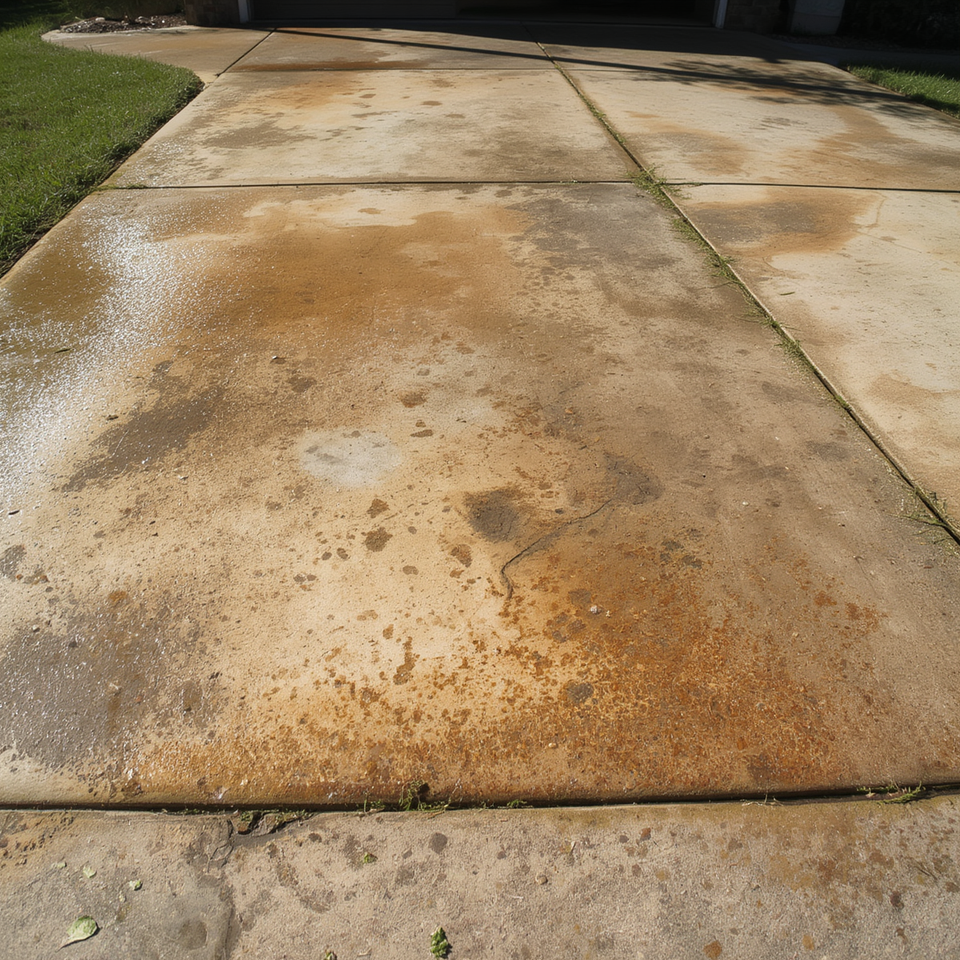
Despite frequent rainstorms, their driveway still looks dirty.
In fact, for many properties throughout Conroe, The Woodlands, Magnolia, Kingwood, New Caney, Splendora, and Willis, driveways often look worse during the summer than they do during any other time of the year.
At Epic Power Washing Solutions, one of the most common questions we hear during June and July is:
"Why does my driveway still look dirty when we've had so much rain?"
The answer comes down to how concrete works, how summer weather affects exterior surfaces, and why rain often contributes to staining rather than removing it.
If you want to keep your property looking clean and prevent long-term concrete deterioration, understanding what happens during the summer months is important.
Bring your driveway back to life—request your free driveway cleaning estimate or call (832) 271-8350 today.
Why Summer Is So Hard on Concrete Surfaces
Most homeowners think of driveways as one of the toughest parts of their property. After all, concrete is designed to withstand vehicle traffic, changing weather conditions, and years of use.
While concrete is incredibly durable, it is also surprisingly vulnerable to staining and buildup.
Throughout the summer, your driveway is exposed to:
- High temperatures
- Heavy UV exposure
- Frequent thunderstorms
- Humidity and moisture
- Vehicle traffic
- Dirt and debris carried by rainwater
- Pollen residue left behind from spring
These conditions work together to create the perfect environment for staining, discoloration, and organic growth.
What may begin as a small amount of dirt quickly becomes embedded into the surface over time.
Why Rain Doesn't Actually Clean Your Driveway
One of the biggest misconceptions homeowners have is that rain naturally washes away dirt and grime.
While rain may rinse loose debris from the surface, it rarely removes the contaminants that are causing discoloration.
Instead, rain often:
- Pushes dirt deeper into concrete pores
- Spreads stains across larger areas
- Deposits additional contaminants onto surfaces
- Encourages algae and mildew growth
- Creates streaking and uneven discoloration
Think about what happens during a typical summer thunderstorm. Water runs off roofs, lawns, landscaping, and streets before flowing across your driveway.
As that water moves, it carries dirt, pollen, organic matter, and contaminants directly onto your concrete.
Rather than cleaning your driveway, rain often delivers new material that contributes to staining.
Rain isn't removing the buildup—schedule professional driveway cleaning today.
Concrete Is More Porous Than Most Homeowners Realize
One of the biggest reasons driveways become stained is because concrete acts like a sponge.
Although it appears solid, concrete contains countless tiny pores that absorb:
- Moisture
- Dirt particles
- Oil residue
- Organic debris
- Pollen residue
- Rust-producing minerals
Once contaminants enter these pores, they become much more difficult to remove with ordinary rinsing.
This is why many driveways continue looking dirty even after multiple rainstorms.
The contamination isn't sitting on top anymore—it's embedded within the surface.
How Summer Storms Create New Stains
Montgomery County experiences frequent summer rain events.
While these storms help lawns and landscaping thrive, they often create new staining problems for concrete surfaces.
Heavy rainfall can carry:
- Clay-rich soil
- Mulch particles
- Organic debris
- Tree tannins
- Landscape runoff
- Vehicle contaminants
In communities like Magnolia, Willis, Splendora, and New Caney, clay-heavy soil is especially common.
When rain splashes this soil onto concrete, it often leaves behind orange, brown, or reddish staining that becomes more noticeable over time.
Without professional cleaning, these stains can continue darkening throughout the summer.
Why Algae Loves Summer Driveways
Heat and moisture create ideal conditions for algae growth.
Many homeowners first notice algae as green patches forming along the edges of their driveway or in shaded sections.
Common areas where algae develops include:
- North-facing driveways
- Areas shaded by trees
- Spaces near flower beds
- Sections with poor drainage
- Low spots where water collects
Once algae begins spreading, it becomes more than a cosmetic issue.
Algae creates slippery surfaces that can become dangerous when wet.
This is especially concerning for families, children, visitors, and anyone walking across the driveway after a rainstorm.
Remove slippery algae before it becomes a hazard—book driveway cleaning today.
Oil Stains Become More Visible During Summer
Summer heat often makes existing oil stains appear darker and more noticeable.
As temperatures rise:
- Oil residues expand within concrete pores
- Heat intensifies discoloration
- Dust and dirt stick more easily to affected areas
- Stains spread beyond their original location
Even small vehicle leaks can eventually create large, unsightly dark patches across your driveway.
The longer oil remains embedded in concrete, the more difficult removal becomes.
Why Waiting Until Fall Usually Costs More
Many homeowners assume they can simply wait until cooler weather arrives before cleaning their driveway.
Unfortunately, summer conditions allow stains and buildup to worsen quickly.
Waiting several months often means:
- Deeper staining
- More algae growth
- Additional discoloration
- Longer cleaning times
- Greater risk of surface deterioration
The sooner contaminants are removed, the easier it is to restore your driveway's original appearance.
Preventative maintenance is almost always less expensive than correcting years of accumulated buildup.
How Professional Driveway Cleaning Restores Concrete
Professional power washing removes contaminants that ordinary rinsing cannot reach.
At Epic Power Washing Solutions, we use professional equipment designed to clean concrete safely and effectively.
Professional driveway cleaning helps:
- Remove embedded dirt and grime
- Eliminate algae and mildew growth
- Restore brighter concrete surfaces
- Improve curb appeal
- Reduce slip hazards
- Extend the life of your concrete
The result is a cleaner, safer, and more attractive property.
Restore your driveway's appearance—schedule your cleaning service today.
Why Homeowners Choose Epic Power Washing Solutions
- Local Montgomery County expertise
- Professional driveway and concrete cleaning
- Surface-safe cleaning methods
- Eco-friendly cleaning solutions
- Reliable scheduling and professional service
- Serving Conroe, The Woodlands, Magnolia, Kingwood, New Caney, Splendora, and Willis
Keep your driveway looking its best this summer—get your free estimate or call (832) 271-8350.
Final Thoughts
If your driveway seems dirtier every time it rains, you're not imagining it.
Summer weather in Montgomery County creates ideal conditions for stains, algae, dirt, and contaminants to accumulate on concrete surfaces.
Rain may rinse away loose debris, but it often contributes to the very staining homeowners are trying to eliminate.
Professional driveway cleaning removes the buildup that rain leaves behind and helps protect your property's appearance throughout the summer season.
Restore Your Driveway This Summer
Call (832) 271-8350 or request your free estimate today.